The Brutal Reality of The Wild
-
KILLS
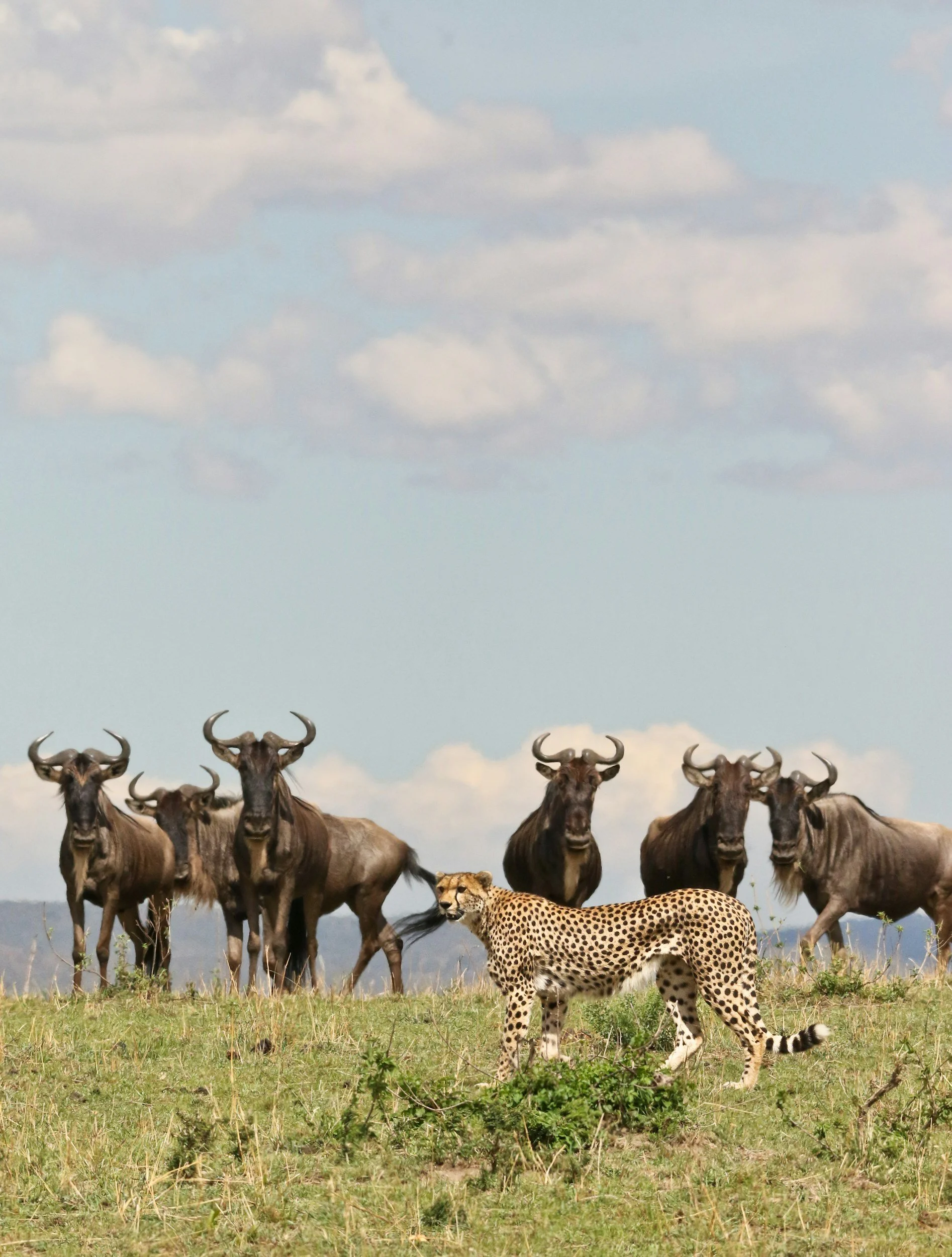
Predator kills are among the most sought-after sightings in both ecosystems, and they are exactly as raw as you would expect. A lion suffocating a wildebeest, a cheetah eating a gazelle alive because it lacks the jaw strength to kill quickly, a pack of wild dog dismembering prey while it is still moving: not exceptional events. They are Tuesday morning in the Serengeti. Most experienced safari travellers describe witnessing a kill as one of their most powerful moments in the wild. Some find it harder than expected.
-
Calving Seasons
There are notable “calving seasons” in certain destinations you may choose. For example, the southern Serengeti between January and March produces some of the most tender wildlife scenes you will ever witness, and some of the most brutal. Calves are born into a landscape full of predators who have timed their own breeding specifically to coincide with this glut of vulnerable young animals. You may watch a calf take its first steps and, twenty minutes later, watch it taken by a cheetah. This is not a failure of the ecosystem. It is exactly how it is supposed to work. The wildebeest birth thousands of calves simultaneously precisely because predators cannot take them all.
-
River Crossings
The Mara River crossings are spectacular and they are also genuinely violent. Wildebeest drown, are taken by crocodiles, are trampled by the animals behind them, and collapse from exhaustion on the banks. Carcasses accumulate along the river during peak crossing season and become their own ecosystem, feeding vultures, crocodiles and a long list of scavengers. The crossing is not just dramatic wildlife viewing, it is a mass mortality event that the ecosystem depends on. The nutrients from those carcasses feed the river and the surrounding land for months.
-
Wildebeest Migrations
Wildebeest are not graceful animals and they do not die gracefully. They are also present in extraordinary numbers, which means that encounters with sick, injured or dying animals are not uncommon, particularly during and after the crossing season. A wildebeest that has broken a leg in the crossing will not be rescued. It will be found by predators, usually sooner than you might expect. Watching this process, difficult as it can be, is one of the most honest encounters with ecological reality that travel offers.
-
For Children
The question of how much of this to expose children to is a genuinely personal one, and there is no universal right answer. Most guides read the group carefully and can adjust what they pursue and how they frame what is seen. Our honest view is that children who are old enough to be on safari are old enough to understand, with appropriate framing, that animals eat other animals and that death is part of what keeps this landscape alive. Many children handle it more naturally than adults. The key is having a guide who is skilled at reading the moment, which is why we tailor the lodge choices to your partial needs. We also recommend private vehicles; the extra cost is worth being able to determine what is best for your family. This is one another argument for the conservancies, where private vehicles and dedicated guides give you control over the pace and tone of what you encounter.
-
What To Remember
Everything you witness, including the things that are hard to watch, is evidence of an ecosystem in extraordinary health. The presence of apex predators hunting successfully, of scavengers finding enough to eat, of a river sustaining millions of animals through a crossing that kills thousands — all of it points to a landscape functioning as it has for a million years. That is increasingly rare on this planet. Witnessing it, in its entirety and without flinching, is a privilege worth travelling for.