Masai Mara vs Serengeti: Which Safari is Right for You?
Published: April 28th, 2026
Last Update: July 1st 2026
The Masai Mara and Serengeti are part of the same ecosystem but offer very different safari experiences. Here is how to choose between them, and when it makes sense to do both.
The Masai Mara and the Serengeti are not rivals, they are two chapters of the same story — one ecosystem, one border, one continuous cast of wildlife moving between them. The question is rarely which one is better. It is which one is right for your next trip, and which one you come back for.
That said, constraints are real. Time, budget and logistics all matter, and if you can only choose one right now, this guide will help you choose well. We will also be honest about when doing both on a single itinerary makes more sense than choosing at all.
For a detailed breakdown of what is happening in each part of the ecosystem throughout the year, read our Mara and Serengeti Seasonal Guide. For the full story of the wildebeest migration that connects both destinations, see The Great Wildebeest Migration Explained.
The Geography: One Ecosystem, One Invisible Border
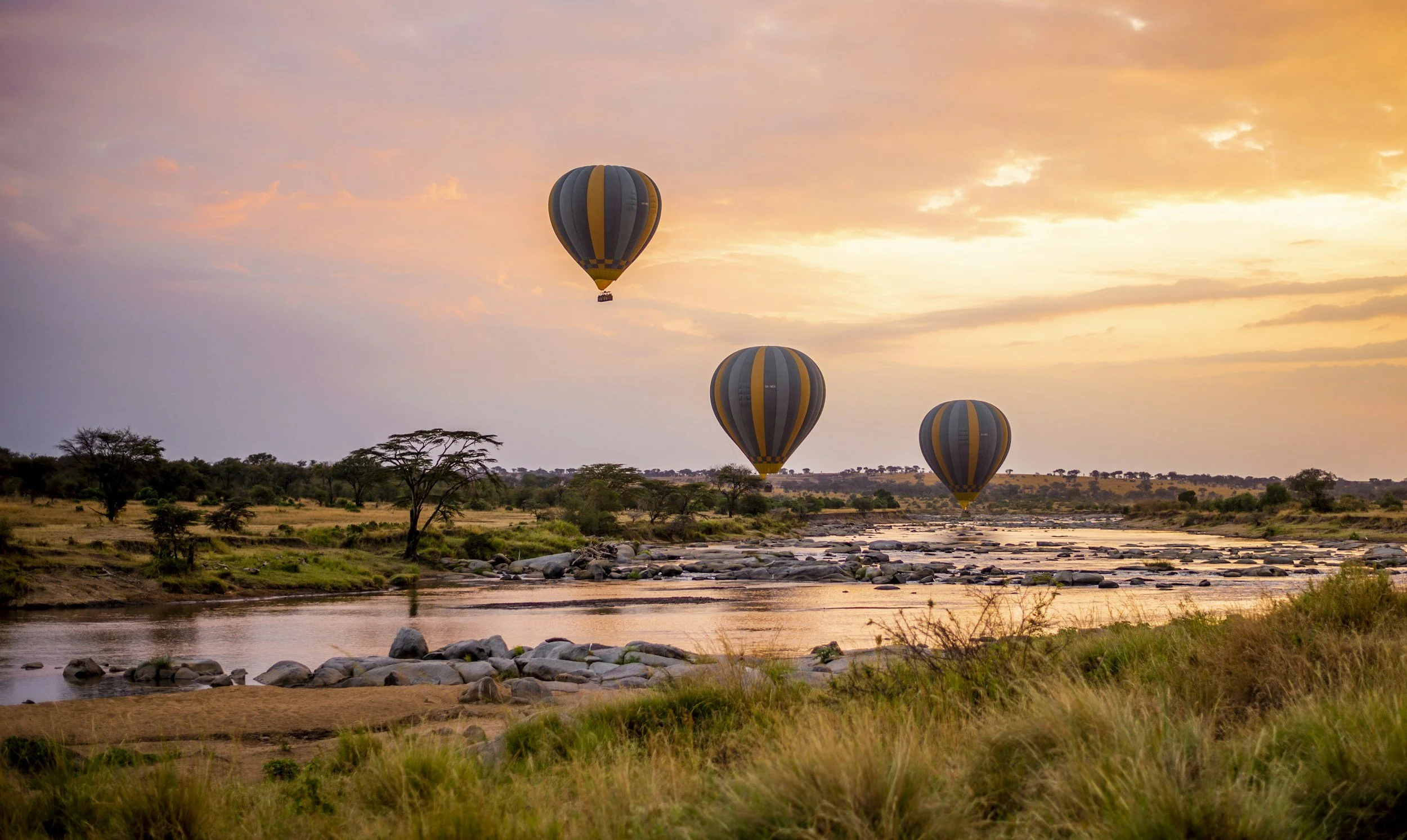
Kenya's Masai Mara and Tanzania's Serengeti are essentially one ecosystem separated by an international boundary. The Mara River flows through both. The same wildebeest herd crosses between them. The lions do not check passports. Serengeti
The Serengeti covers approximately 14,750 square kilometres. The Masai Mara National Reserve covers around 1,510 square kilometres. That size difference shapes everything about how each destination feels and how you experience it. The Serengeti is vast, varied and requires planning to move between its different zones. The Mara is concentrated and intense, easy to navigate, and close to Nairobi. Both are spectacular for completely different reasons.
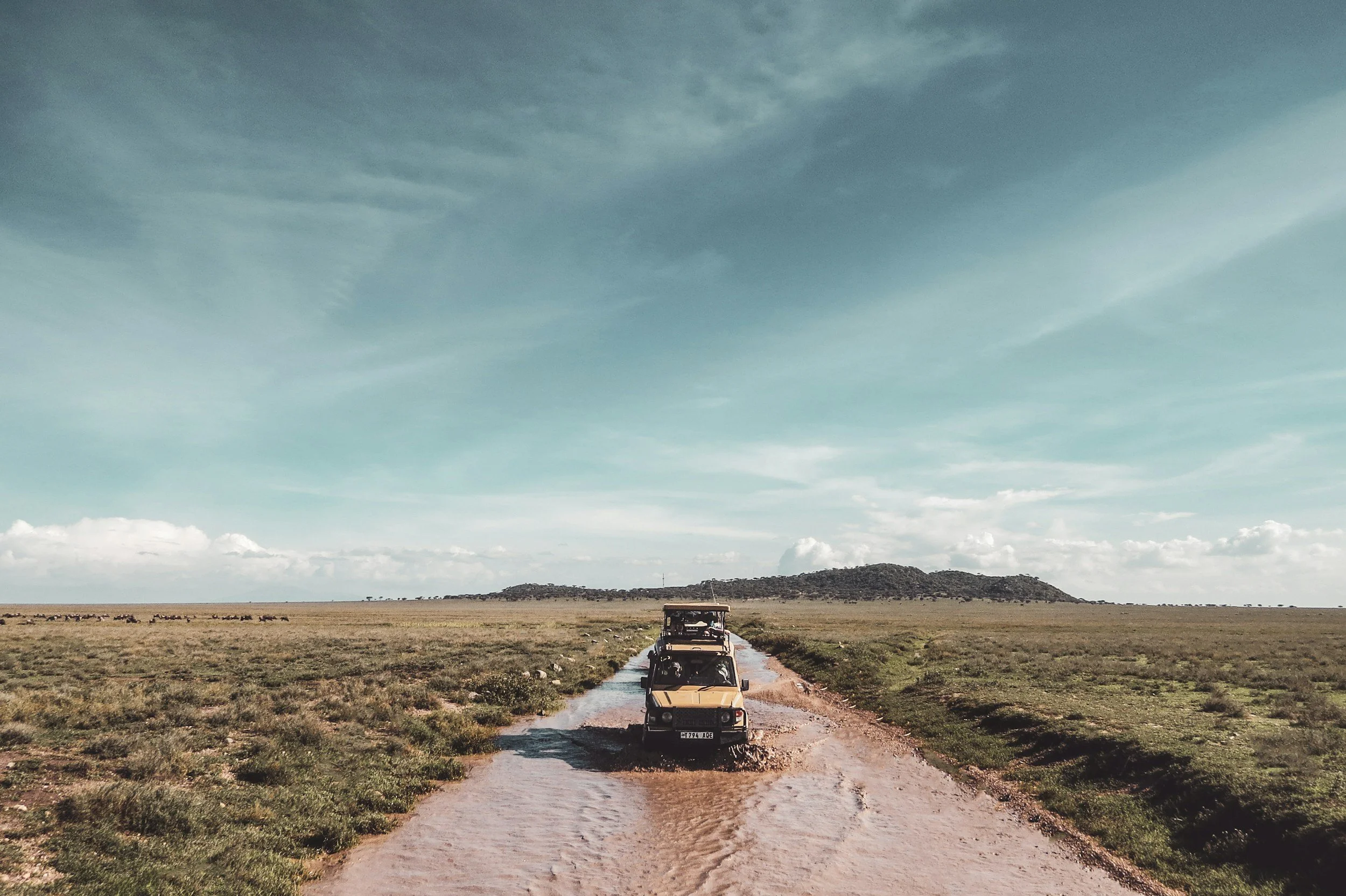
The Serengeti demands more logistically but rewards you accordingly. Its scale means that what you see depends enormously on which part of the park you are in and when. Due to the size of the Serengeti, flights are often required to cover more of the region — moving between the southern calving grounds, the central Seronera area, the Western Corridor and the northern Serengeti near the Mara River involves either charter flights or long drives.
The Serengeti has more bird species than the Masai Mara, with over 500 recorded species, and its landscape diversity is extraordinary. The short-grass southern plains around Ndutu are open and golden. The central kopjes — ancient granite formations rising above the savannah — are leopard country. The northern woodlands feel wilder and less visited. These are meaningfully different experiences within a single park.
The Serengeti is the only place to see the calving season, which many experienced safari travellers rate as their most powerful wildlife experience. It is also the better destination for the June Grumeti River crossings, the less-visited but genuinely spectacular precursor to the Mara crossings.
Scale, variety, and the full arc of the migration
The Serengeti:
Getting there: Most visitors fly into Kilimanjaro or Arusha in northern Tanzania, then take a charter flight into the Serengeti. Journey times vary significantly depending on which zone you are heading to.
Best for: Travellers with ten days or more, anyone who wants to follow the full migration story, those prioritising calving season, and repeat East Africa visitors.
The MARA
Concentrated, dramatic, and closer than you think
Getting there: Nairobi to the Mara is a short, scenic flight. Multiple scheduled departures run daily from Wilson Airport. It is one of the most logistically straightforward safari destinations in Africa.
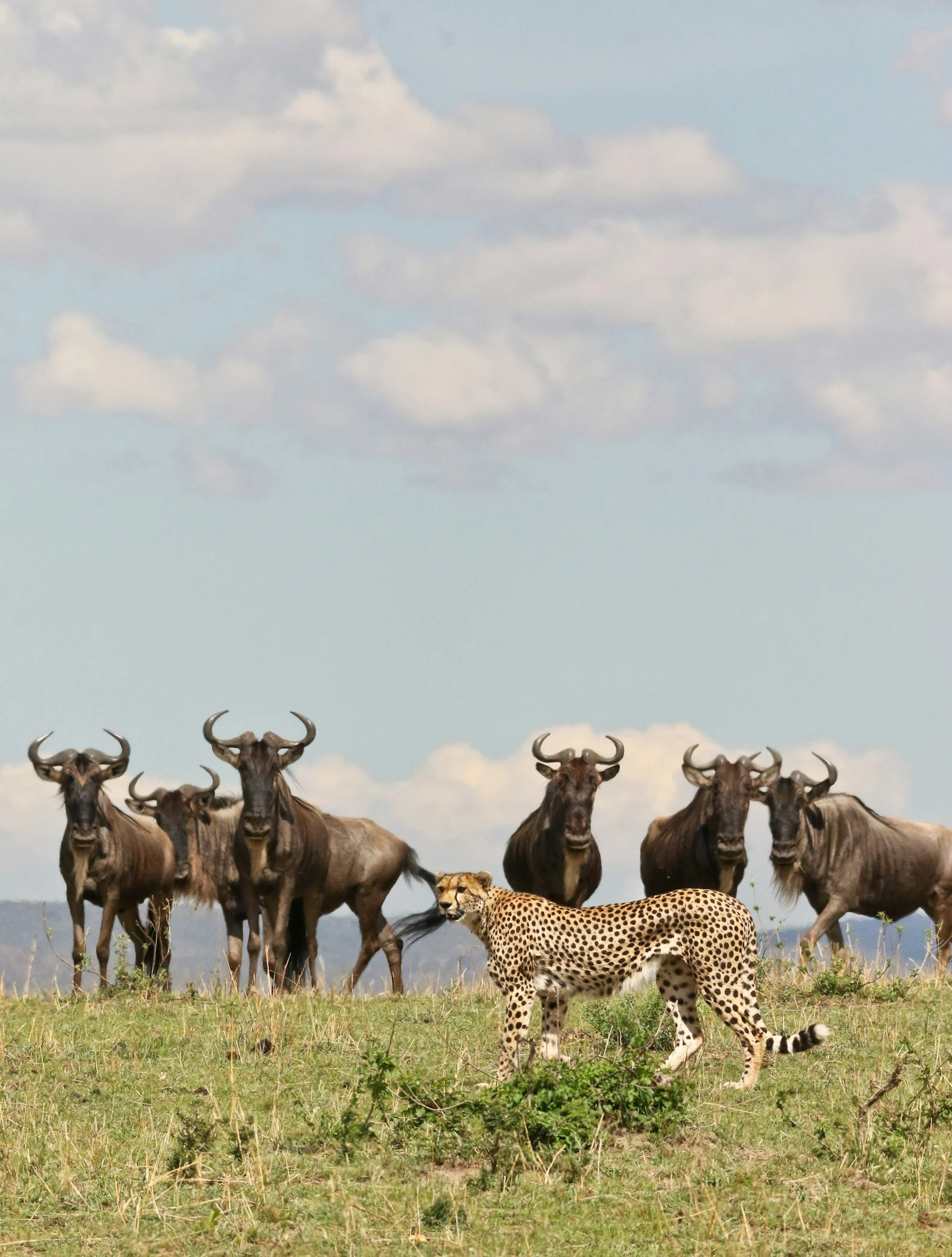
The Masai Mara sits in southwest Kenya, roughly 45 minutes by light aircraft from Nairobi's Wilson Airport. Its relative compactness is one of its strengths. The Masai Mara has a higher density of lions and cheetahs and is known for its large population of hyenas. The open grassland plains make for exceptional visibility — you are rarely far from something extraordinary.
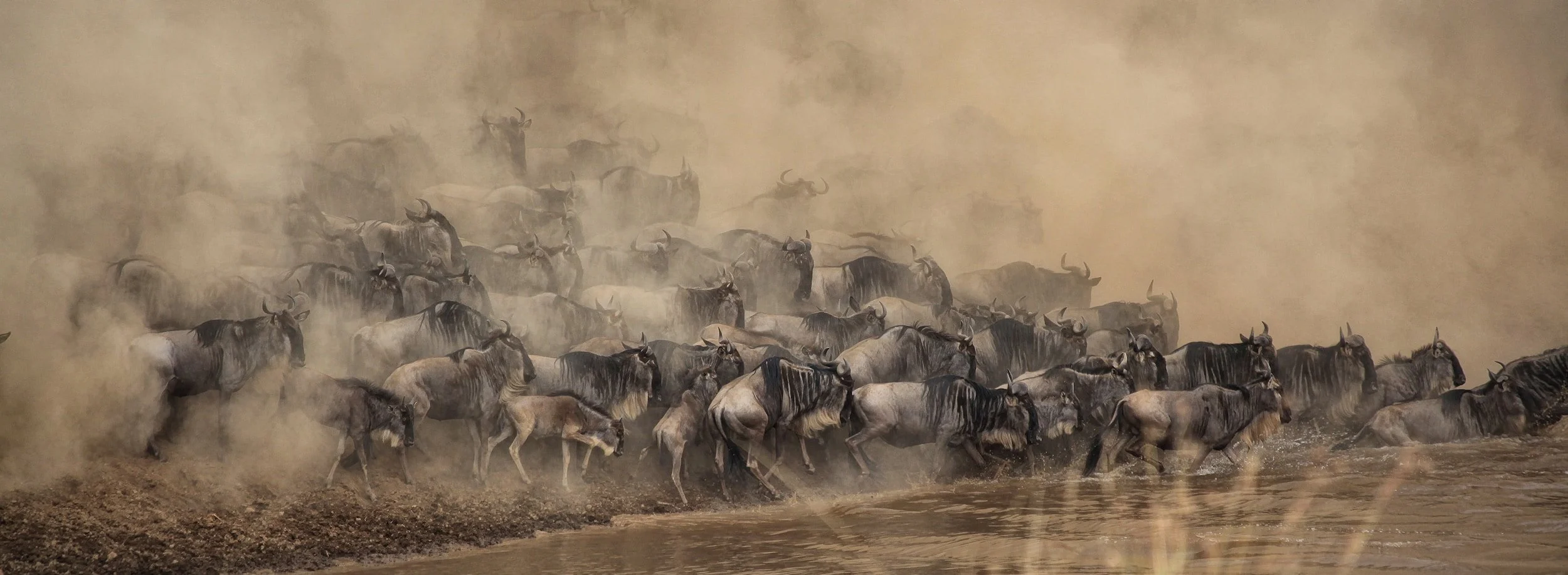
From July through October, the Masai Mara holds one of the greatest concentrations of wildlife on earth, as the wildebeest migration herds arrive from Tanzania and the Mara River crossings begin. Outside of migration season, the resident wildlife is exceptional year-round. The Mara is not a destination that requires a specific event to justify it.
Best for: First-time visitors to East Africa, anyone prioritising the river crossings, families who want ease of access, and travellers with a week or less.
The Masai Mara National Reserve VERSUS The Mara Private Conservancies: the distinction that matters
The Serengeti handles things differently
The Serengeti does not have the same conservancy system as the Mara. Tanzania's model is built around national park concession areas: zones within or adjacent to the park where a limited number of operators hold exclusive or semi-exclusive access. The effect is similar in some zones: lower vehicle density, more flexibility, a quieter experience. But the mechanism is different, and the connection to community land ownership is less direct than in the Mara conservancies.
This is one of the reasons we find the Mara conservancy model particularly compelling from a sustainability and community impact perspective. It is land that belongs to the Maasai, managed by the Maasai, generating income for the Maasai. Tourism here is not extracting value from a place, it is funding the conditions that make the place possible.
Wildlife: what you are more likely to see where
Both destinations hold the full cast of African wildlife, and the differences between them are of emphasis rather than presence or absence. The list below covers what you can realistically expect in the greater Mara-Serengeti ecosystem, not as guarantees, but as a honest picture of what this landscape reliably produces.
The ‘guaranteed’ sightings, go expecting these:
-
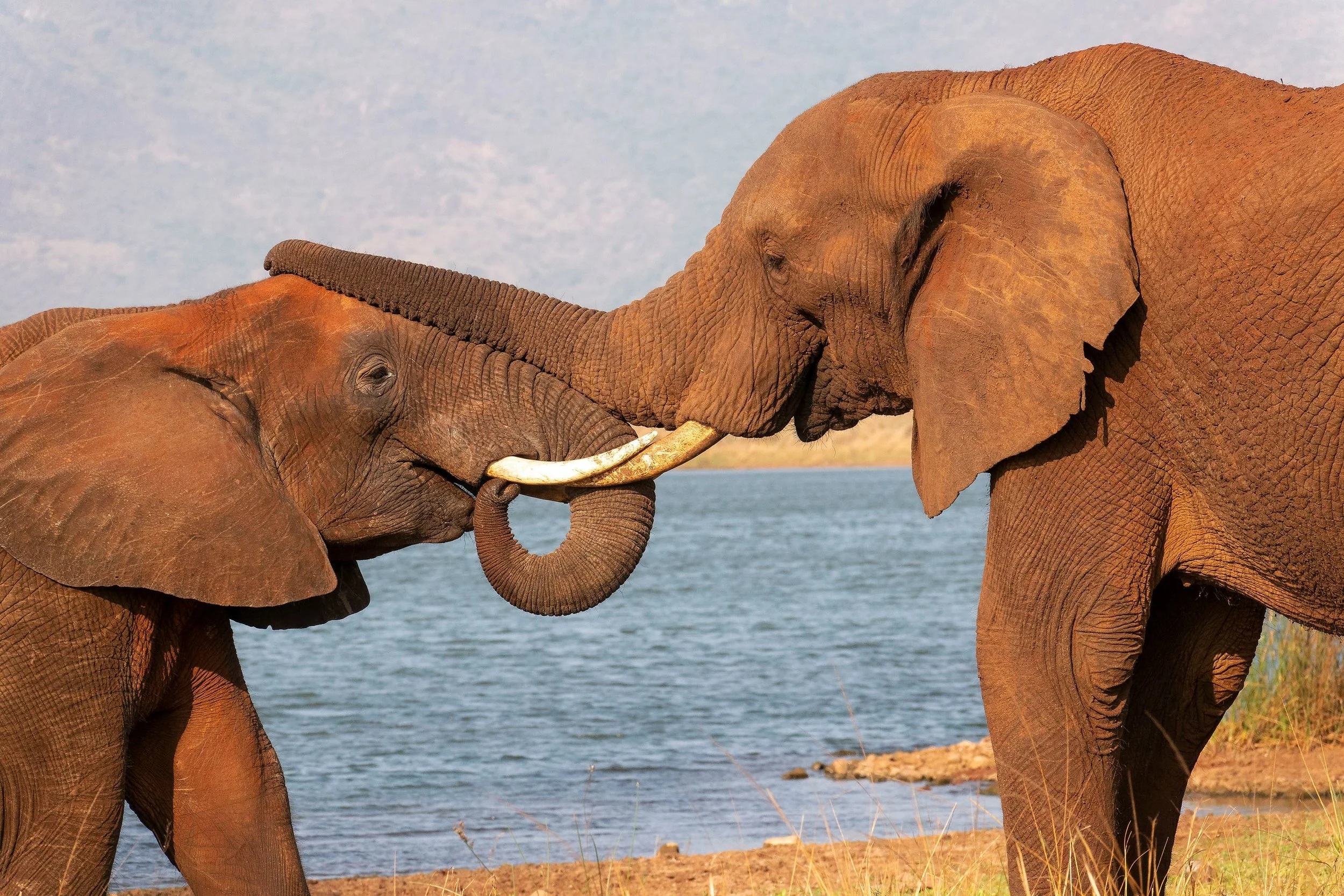
These are effectively certain in both destinations throughout the year. A tower of giraffe moving through acacia woodland at dusk, or a breeding herd of elephant crossing a riverbed, are experiences that stay with people long after the big cat sightings have faded (we absolutely love giraffes!). Buffalo are similarly reliable, and their presence near water sources makes them a consistent feature of afternoon drives.
-
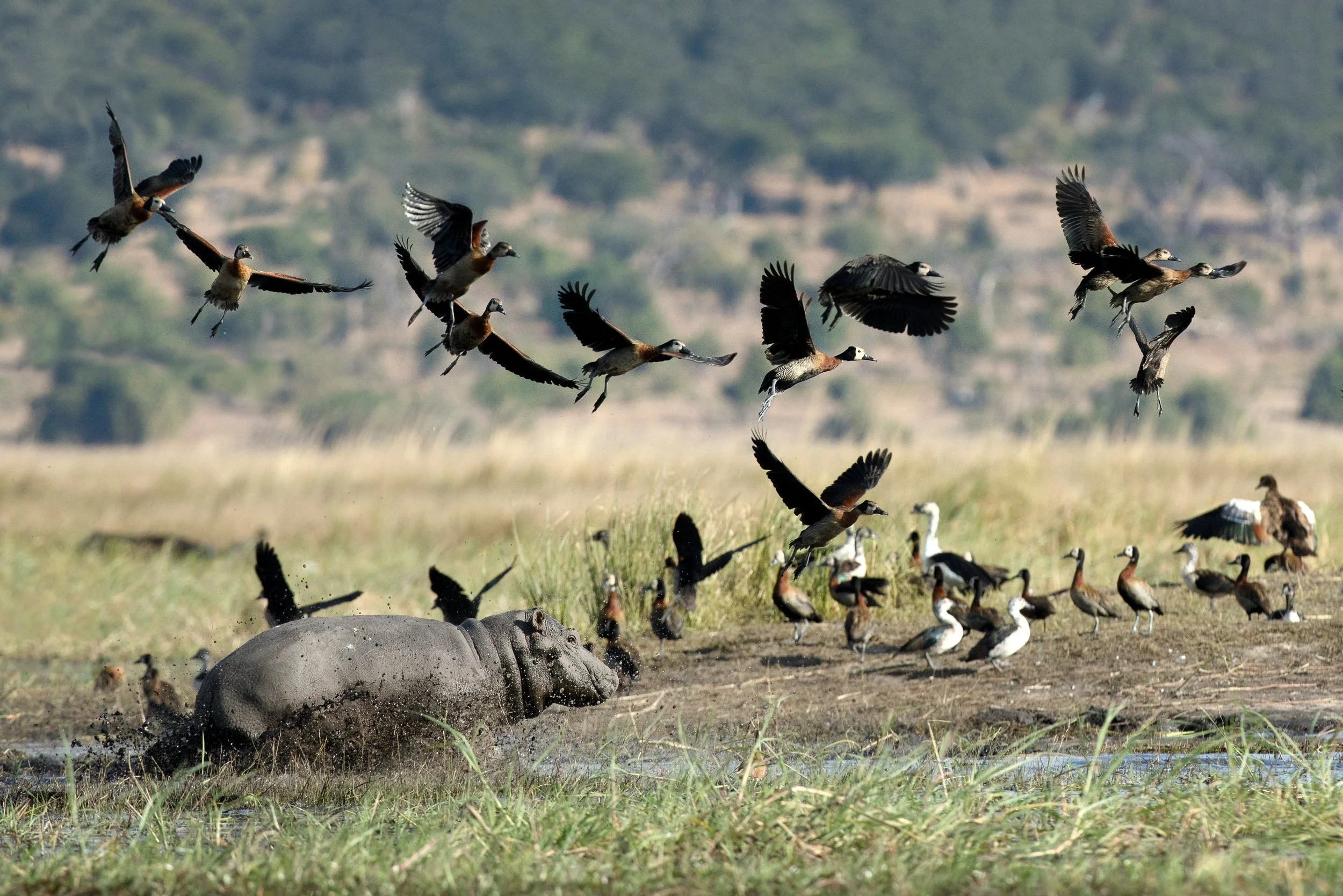
Hippo are found wherever permanent water exists, particularly along the Mara River and its tributaries. They are almost always present and consistently underestimated by first-time visitors — there is nothing quite like watching a pod of hippo negotiate social politics in a river pool at close range.
-
Africa's largest antelope, are present in both ecosystems and more commonly seen than most people expect. They move quietly through the landscape and are easily overlooked when the predator action is intense, but worth paying attention to.
-
Both are outstanding. The Serengeti holds Africa's largest lion population. The Mara has one of the highest densities of lions on the continent. You are not choosing between them on this basis. What changes is the context: Serengeti lions in the vast central plains have a different quality of space around them than Mara lions in the concentrated grasslands.
-
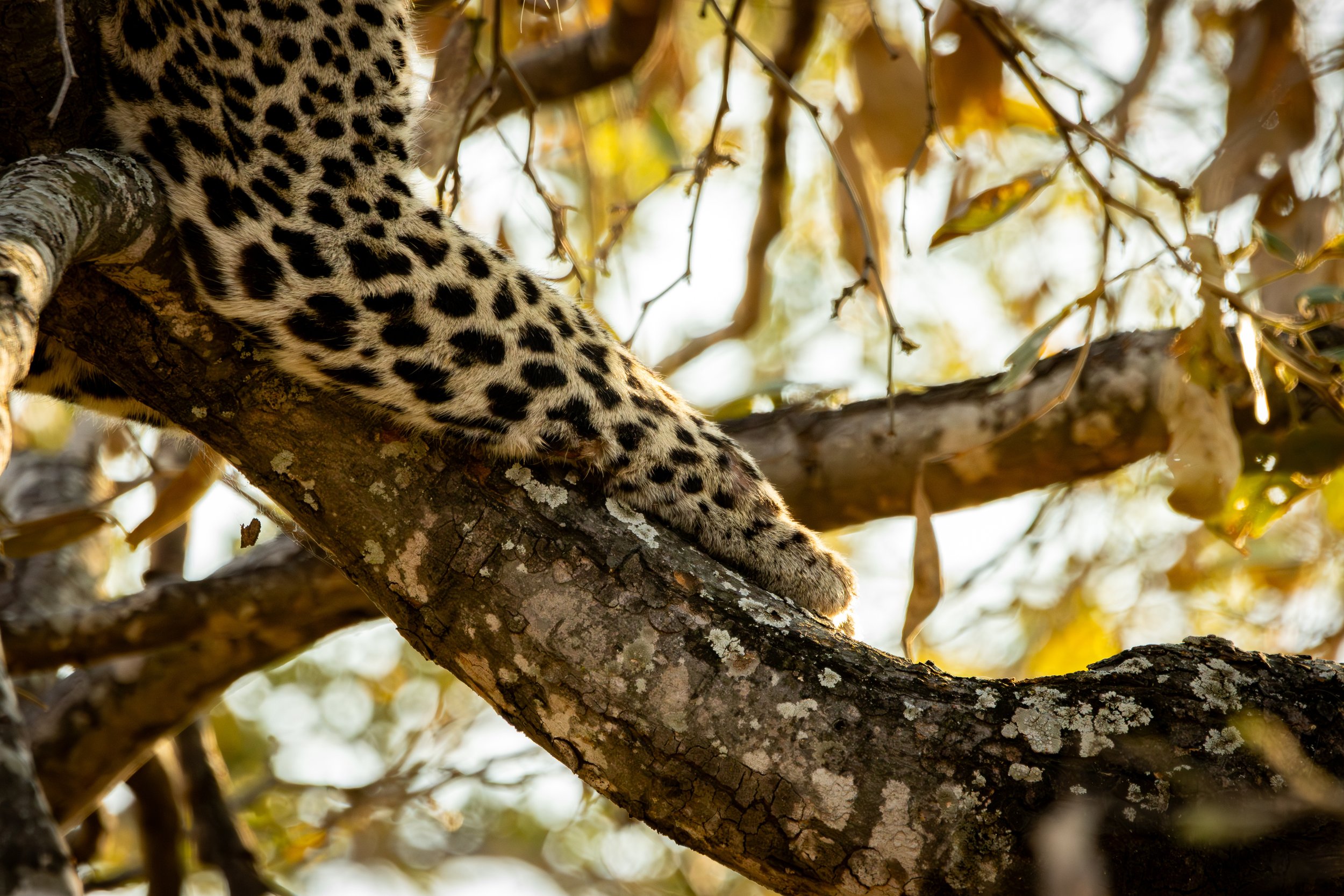
The Serengeti has a better chance of spotting the elusive leopard, particularly in the kopje regions of the central Serengeti. The Mara's private conservancies, with off-road access, also produce excellent leopard sightings.
-
The Mara's open plains are exceptional cheetah habitat. The southern Serengeti during calving season is also outstanding for cheetah, with an abundance of prey.
-
Both destinations hold large elephant populations. The Mara's private conservancies, particularly Mara North, are especially good for elephant year-round.
-
Black rhino are present in the Masai Mara, particularly in the Mara Triangle section of the reserve, though sightings are far from guaranteed given their critically low numbers and naturally elusive behaviour. The Serengeti has very few remaining rhino. For dedicated rhino sightings, other destinations in Kenya (speak to us about Ol Pejeta Conservancy in Kenya, or parts of South Africa offer considerably better odds). A rhino sighting in the Mara is a genuine privilege and should be treated as such rather than expected.
-
Present in both ecosystems but very rare, and sightings are among the most celebrated in either destination. African wild dog populations are under pressure across the continent and encounters here are genuinely uncommon. When they happen, they are unforgettable. Wild dogs hunt as a coordinated pack with a success rate that outperforms lions and leopard, and watching a hunt unfold is one of the most visceral wildlife experiences Africa offers. Consider any wild dog sighting a significant piece of luck. For the best Wild Dog sightings, speak to us planning your journey to Laikipia, Kenya.
-
Highly reliable in both destinations and deeply underrated as a safari subject. Spotted hyena are complex, intelligent and fascinating to watch — their social structures are matriarchal, their communication elaborate, and a clan around a kill is one of the most compelling wildlife scenes the ecosystem produces. Do not write them off as scavengers. They are apex predators in their own right and among the most successful hunters in Africa.
-
A different animal entirely, and a genuinely rare sighting. Striped hyena are solitary, nocturnal and far less commonly encountered than their spotted relatives. They are present in both ecosystems but sightings are uncommon — this is the kind of encounter that experienced guides talk about for years. If you are doing night drives in the Mara conservancies, there is a chance. Do not expect it, but know that it is possible.
-
A different animal entirely, and a genuinely rare sighting. Striped hyena are solitary, nocturnal and far less commonly encountered than their spotted relatives. They are present in both ecosystems but sightings are uncommon — this is the kind of encounter that experienced guides talk about for years. If you are doing night drives in the Mara conservancies, there is a chance. Do not expect it, but know that it is possible.
-
Nocturnal, solitary and almost never seen. An aardvark sighting is the kind of thing guides mention in hushed tones. It happens so rarely that even experienced safari-goers who have spent years in the field have never encountered one. If you see an aardvark on a night drive in the conservancy, you have won something. There is no more useful way to frame it than that.
Travelling with children?
Under six: Most camps and conservancies in both destinations do not accept children under six, and for good reason. Game drives are long, start early, require stillness and quiet at key moments, and involve sitting in an open vehicle near large predators. A four-year-old who is bored, cold or frightened is not having a good time — and neither is anyone else in the vehicle. There are exceptions: some family-specific camps accept younger children with private vehicles and guides, which removes the constraint of sharing a drive with other guests. If travelling with very young children is non-negotiable, ask specifically about private vehicle options and which camps genuinely cater for under-sixes rather than merely tolerating them.
Six to twelve: This is the sweet spot for a first safari experience. Children in this age range are old enough to understand what they are seeing, engaged enough to ask good questions, and young enough that the whole thing feels genuinely magical rather than checked off a bucket list. The conservancies are particularly good for this age group — the range of activities beyond the vehicle (guided walks, night drives, fly camping) gives children something active to engage with, and Maasai guides who involve children directly in tracking and bush knowledge create memories that last decades. Walking safaris in the conservancies typically have a minimum age of around twelve, so check specifics with your operator.
Twelve and above: Essentially the same experience as adults, with a greater capacity to absorb the ecological and cultural depth of what they are seeing. Older teenagers often find the Serengeti particularly compelling — its scale and complexity reward curiosity in a way that the more concentrated Mara sometimes does not. Night drives, walking safaris and fly camping are all available to this age group in the conservancies, and the full range of the ecosystem becomes accessible.
A practical note on school holidays: Peak migration season in the Mara coincides almost exactly with northern hemisphere summer holidays, which means July and August are both the most expensive and most booked months of the year. Families who can travel in June or September will find better availability, lower rates, and in most cases equally good wildlife. The conservancies are the clearest argument for booking early regardless of when you travel — limited beds and high demand mean that family-suitable camps in the best positions fill far in advance.
The honest answer on which to choose
If you have five to seven days and this is your first East Africa trip: The Masai Mara, based in a private conservancy, is the more efficient choice. It is easier to reach, more compact, and the conservancy experience delivers everything that makes an African safari extraordinary without requiring you to move between multiple camps or cover vast distances. Come back for Tanzania.
If the river crossings are your priority: The Masai Mara between July and October, based in a conservancy near an active crossing point.
If you have ten days or more: A combined itinerary covering both is almost always the right answer. The southern Serengeti for calving season followed by the Mara, or the Mara for crossings followed by central Serengeti, gives you a complete story rather than a chapter.
If this is your second East Africa trip and you did the Mara last time: Tanzania. The Serengeti will feel like a revelation after the Mara, not a repetition.
If calving season is your priority: The southern Serengeti around Ndutu between January and March. There is no equivalent in Kenya.
If you are travelling with children: Both work well for families with children aged six and above. The Mara's proximity to Nairobi makes the logistics simpler for families with younger children or tighter schedules. The conservancies are particularly good for families because the range of activities (walking, night drives, fly camping) gives children something to engage with beyond sitting in a vehicle.
The information in this guide reflects patterns observed over many years in both ecosystems. Every season brings its own conditions and surprises. Nature does not follow a fixed script, and the increasing unpredictability of East African rainfall patterns means that flexible planning and experienced guidance on the ground matter more than ever.
FAQ
Please note these are summaries of what is contained in the information above
Is the Masai Mara or the Serengeti better for a first safari?
Both are excellent for a first safari, and the honest answer depends on your timing and what you most want to see. The Masai Mara is more compact, easier to reach from Nairobi, and the private conservancies offer a full range of activities including night drives and walking safaris that make an exceptional introduction to African wildlife. The Serengeti offers more variety across its different zones but requires more planning to navigate. For a first trip of seven days or less, the Mara is the more efficient choice. For ten days or more, combining both is the most rewarding option.
Can you visit both the Masai Mara and the Serengeti on one trip?
Yes, and many travellers do. A combined Kenya and Tanzania itinerary typically involves a short charter flight between the two countries and is straightforward when planned properly. Spending four or five nights in each gives you a meaningfully different experience in both places. The contrast between the concentrated intensity of the Mara and the vast scale of the Serengeti makes each one feel richer, not repetitive.
What is the difference between the Masai Mara National Reserve and the private conservancies?
The national reserve is government-managed public land open to all visitors. The private conservancies are community-owned lands surrounding the reserve, leased from Maasai families and managed by safari operators with strictly controlled visitor numbers. In the conservancies you can do night drives, walking safaris and off-road driving, none of which are permitted in the main reserve. Vehicle numbers at sightings are capped at three to five, compared to the reserve where there is no limit. Conservancy fees go directly to Maasai landowners, funding schools, healthcare and community development.
Why do you recommend the private conservancies over the national reserve?
Because the experience is fundamentally more wild and more honest. Fewer vehicles means animals behave naturally. Off-road access means you can follow wildlife into the bush rather than watching from a designated track. Night drives open up a dimension of the ecosystem that day visitors never encounter. And the model is right: the land belongs to the Maasai, the income goes to the Maasai, and conservation is funded by the people who own the land. That is a more durable and equitable arrangement than most safari models offer, and it is one we are proud to support.
Is the Serengeti more expensive than the Masai Mara?
Generally yes, though both vary significantly depending on season, camp and how you structure the itinerary. The Serengeti's camps tend to be more costly than those in the Masai Mara, partly due to the logistics of operating in a more remote and vast landscape. The Mara's national reserve fees can be high during peak season, though conservancy accommodation typically bundles fees into the overall rate. The clearest practical point is that both destinations offer all-inclusive pricing at most camps, covering game drives, meals, park fees and guiding, so the comparison is usually between total package costs rather than individual line items.
Are there rhinos in the Masai Mara or Serengeti?
Black rhino are present in the Masai Mara, particularly in the Mara Triangle. Sightings are not guaranteed given their low numbers and naturally elusive behaviour. The Serengeti has very few remaining rhino. For dedicated rhino sightings, other destinations in Kenya or South Africa offer considerably better odds.
How long should I spend in the Masai Mara or Serengeti?
Four nights is a practical minimum for either destination as a standalone trip. It gives you enough game drives to encounter a range of wildlife and, during migration season, a reasonable chance of witnessing a river crossing. Six or seven nights allows you to explore different areas and go deeper into the landscape rather than just covering the highlights. For a combined Kenya and Tanzania itinerary, ten to fourteen days is the sweet spot.
Do I need to visit during migration season to have a great safari?
No. Both destinations offer exceptional wildlife year-round. The migration is a highlight, not a prerequisite. The Mara's resident lion, leopard and cheetah populations are present in every month. The Serengeti's central and southern regions hold extraordinary wildlife regardless of where the migration herds are. April through June is particularly underrated in both destinations — the landscape is at its most beautiful, wildlife is excellent, and the camps are quiet.
Is the Masai Mara or Serengeti suitable for children, and what age is appropriate?
Both destinations welcome children, with some important nuances around age and what the trip will actually involve. Most camps and conservancies do not accept children under six on standard game drives (speak to us about completely private camps for family flexibility), and those that do usually require a private vehicle. For children aged six to twelve, both ecosystems are exceptional: old enough to understand what they are seeing, young enough that it feels genuinely magical. The Mara's private conservancies are particularly good for this age group because the range of activities beyond the vehicle, including guided walks, night drives and interaction with Maasai guides, gives children something active and varied to engage with. Walking safaris typically have a minimum age of around twelve. Teenagers get the full experience with no meaningful restrictions, and many find the scale and complexity of the Serengeti especially compelling.
One thing worth preparing children for, regardless of age: this is a wild ecosystem and game drives may include witnessing kills, predator hunts, and animals dying. Most children handle this more naturally than parents expect, particularly with a skilled guide who frames what they are seeing honestly and without drama. It is worth discussing with your guide in advance so they can read your group and adjust accordingly. A private vehicle, available in all the private conservancies, gives you the most control over pace, timing and what you pursue on any given drive.
For families travelling during school holidays, book as early as possible. Peak migration season coincides with northern hemisphere summer, and family-suitable conservancy camps with private vehicle options fill well in advance.